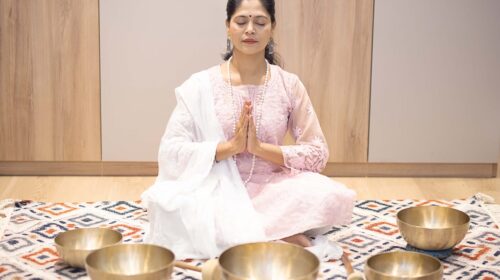
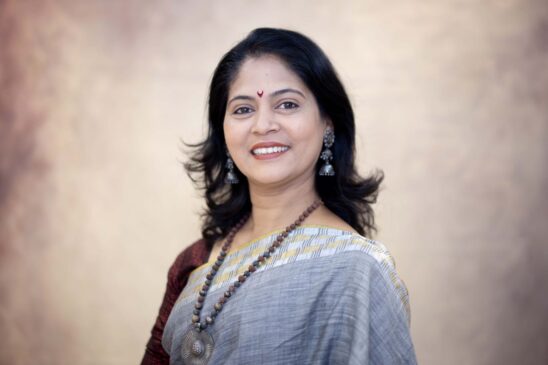
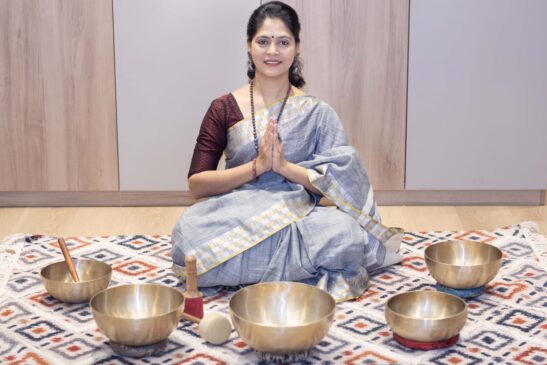
At BrilliantRead Media, we always strive to bring meaningful and powerful stories from India and around the world to empower, transform, and motivate our growing community. As part of this endeavour, we are delighted to feature Vaishali Swatmani, Founder of Siddhadham Wellness Retreat and Siddhadham Foundation, Corporate Wellness Consultant, Conscious Leadership Coach, and Sound Healing & Mindfulness Expert.
With over 17 years of experience in helping individuals, leaders, and organizations create healthier, happier, and more conscious lives, Vaishali has been working at the intersection of ancient wisdom and modern wellness practices. Through holistic wellness, mindfulness, yoga, sound healing, breathwork, and transformational coaching, she strives to make inner well-being an integral part of personal and professional development.
Through Siddhadham Wellness Retreat, she has created a sanctuary dedicated to healing, personal transformation, and conscious living. Her vision extends beyond individual well-being through Siddhadham Foundation, which supports education and essential resources for children in tribal communities.
Let’s learn more about her inspiring journey, philosophy, experiences, and vision for a healthier and more conscious world!
Excerpts from our exclusive interview with Vaishali:
You have spent over 17 years helping individuals, leaders, and organizations transform through wellness, mindfulness, yoga, sound healing, and coaching. Was there a defining moment that turned your interest in wellness into a deeper life mission?
I wouldn’t say there was one defining moment. It has been a gradual process of understanding life itself, driven by a deep curiosity about who we are and what we are truly capable of.
Throughout my journey, I began to realise something extraordinary: we are such magnificent mechanisms, yet very few of us have truly been made aware of the potential we carry within ourselves.
We spend so much of our lives learning about the world outside us, acquiring knowledge, building careers, and striving for success. But how much time do we spend understanding the incredible intelligence, capabilities, and possibilities within us?
Just look at the human body. Every cell, every organ, and every system performs remarkably sophisticated functions, most of which happen without our conscious effort. Our bodies are constantly communicating, adapting, repairing, and maintaining a remarkable balance. This made me curious about the deeper dimensions of the human mechanism not just our physical body, but also our mind, emotions, intuition, awareness, and ability to learn, adapt, and transform.
I became particularly interested in understanding the potential of the human brain, our sensory abilities, and the intuitive capacities that we may not have fully explored. I wanted to understand how much of our potential remains undiscovered and how we could become more conscious of it.
My curiosity gradually expanded beyond the physical body. I began exploring the interconnectedness of human beings, how our thoughts, emotions, intentions, and actions influence our relationships and environment, and how developing greater awareness can change the way we experience and respond to life.
This is what led me deeper into yoga, meditation, mindfulness, breathwork, sound healing, and the exploration of consciousness. I began to see these not merely as techniques for relaxation or healing, but as pathways to greater self-understanding and human development.
My vision is to bring together the wisdom of our roots and the insights of modern science to help us understand ourselves more deeply and explore the extraordinary potential we carry within.
My mission is not simply to help people manage stress or heal what is unwell. It is to help them discover what is already magnificent within them, nurture that potential, and learn to use it consciously.
For me, the future of wellness is about moving from healing to awareness, from awareness to potential, and from potential to conscious action. That is the journey I want to take forward not only with individuals but also with organizations and communities, so that we can create a world where people live better, lead better, and contribute more consciously to the world around them.
You strongly believe that “true success begins with inner well-being.” In a corporate world driven by targets, growth, and performance, what does success truly mean to you, and why is inner well-being its foundation?
For me, success is not just about what you achieve. It is also about who you become in the process of achieving it.
We live in a world where success is often measured by numbers, designations, financial growth, and recognition. There is nothing wrong with ambition or achievement. In fact, growth is important. But the question is: at what cost?
If you are achieving everything externally but constantly experiencing stress, anxiety, disturbed relationships, or a sense of emptiness within, then perhaps we need to redefine success.
Inner well-being gives you the ability to enjoy what you create. It helps you make decisions from clarity rather than fear, respond rather than react, and grow without losing yourself in the process.
I often feel that we have invested so much in developing our professional intelligence that we have forgotten to develop our inner intelligence. And that is where the imbalance begins.
True success, for me, is when your external growth and inner state are not working against each other. You can be ambitious, financially successful, and professionally accomplished while still being peaceful, compassionate, and connected with yourself.
Success should add to the quality of your life, not take away from your ability to live it.
Burnout has become one of the biggest challenges facing today’s organizations. As a Corporate Wellness Consultant, what warning signs do companies often overlook, and how can organizations create healthier workplace cultures before burnout becomes a crisis?
I think one of the biggest mistakes organizations make is assuming that a person who is performing well is also doing well.
Sometimes, the people who appear the strongest are the ones who have been suppressing their exhaustion for the longest time. They continue delivering, meeting deadlines, taking responsibility, and showing up for everyone else, while internally they may be completely drained.
Burnout doesn’t always begin with a breakdown. Sometimes, it begins with small changes. A person becomes more irritable, less patient, emotionally disconnected, less creative, or simply starts losing the enthusiasm they once had. There may be difficulty concentrating, disturbed sleep, or a feeling of constantly being overwhelmed.
But because the person is still delivering results, these signs often go unnoticed.
I believe organizations need to move from managing performance alone to understanding the human being behind that performance.
This means creating a culture where people can speak honestly about their challenges without being judged, where leaders are trained to recognize emotional exhaustion, and where recovery is treated as a necessity rather than a weakness.
Practices such as mindful pauses, conscious breathing, movement, sound healing, and reflection can help people become more aware of their internal state and manage stress. But we must also address the larger picture: unrealistic workloads, unclear expectations, poor communication, and the inability to disconnect from work.
We cannot teach someone to breathe mindfully and then continue placing an unreasonable burden on them.
Wellness cannot be an activity added to an unhealthy work culture. It has to become part of the culture itself.
Your work integrates ancient wisdom with modern wellness practices, including yoga, mindfulness, meditation, breathwork, and sound healing. What makes these practices valuable, and how can they transform an individual’s emotional, mental, and overall well-being?
I believe ancient wisdom is relevant today because human nature has not fundamentally changed, even though our lifestyles and working environments have.
We are still dealing with fear, expectations, insecurity, anger, ambition, and the need for control. The difference is that today, we are dealing with all of this at a much faster pace.
One of the simplest and most powerful practices is learning to pause.
Before responding to a difficult email, reacting to a disagreement, or making a high-pressure decision, take a few conscious breaths. Allow yourself to become aware of what is happening within you before deciding what needs to happen outside you.
Another practice is mindful observation. Instead of immediately believing every thought or reacting to every emotion, learn to observe it. Ask yourself: Am I responding to the situation in front of me, or am I responding from an old fear, an assumption, or a past experience?
Yoga helps us reconnect with the body, breathwork can support stress regulation, and meditation develops the capacity to observe our thoughts without being controlled by them. Sound healing also forms part of the holistic wellness practices through which individuals can explore relaxation, self-awareness, and a deeper connection with themselves.
But the real transformation happens when these practices move beyond the mat or the meditation room and enter our everyday behaviour.
Can I listen without interrupting? Can I disagree without disrespecting someone? Can I accept that I may be wrong? Can I make a difficult decision without allowing my ego to take over?
For me, that is where ancient wisdom becomes practical.
It is not about escaping the world or becoming detached from responsibility. It is about participating in life more consciously.
The real practice of mindfulness is not how peaceful you are with your eyes closed, but how consciously you respond when your eyes are open and life challenges you.
As a Conscious Leadership Coach, you work towards developing leaders who are not only effective but also self-aware and emotionally intelligent. What truly distinguishes a conscious leader, and how can leaders balance this approach with the demands of business performance?
A conscious leader is someone who understands that leadership begins with leading oneself.
We often associate leadership with authority, decision-making, influence, and the ability to get things done. But I believe the real test of leadership is how you behave when things don’t go according to your expectations.
How do you respond when someone disagrees with you? What happens when you make a mistake? Can you acknowledge your limitations? Can you listen to a different perspective without feeling threatened?
These moments reveal the consciousness with which a person leads.
Self-awareness begins when we stop looking only at what others are doing and start observing our own patterns. We all have triggers, assumptions, fears, and conditioning. The problem is not that we have them. The problem is when we remain unaware of them and allow them to make our decisions for us.
A leader can begin by reflecting regularly: What triggered me today? Why did I respond the way I did? Did my response help resolve the situation, or did it create more distance? What could I have done differently?
This does not mean becoming soft, avoiding difficult conversations, or compromising on accountability. Quite the opposite.
A conscious leader can make tough decisions, set clear expectations, address underperformance, and pursue ambitious goals. The difference is that these actions come from clarity and responsibility rather than insecurity, anger, or the need to prove oneself.
When leaders become more self-aware, they create greater psychological safety, build trust, and make space for people to contribute their best.
And ultimately, that benefits the business too.
Conscious leadership is not about choosing between people and performance. It is about understanding that sustainable performance depends on how consciously we work with people.
Through Siddhadham Wellness Retreat, you have created a sanctuary dedicated to healing, transformation, and conscious living. What inspired you to establish this space, and what kind of transformation do you hope individuals experience there?
Siddhadham came from the understanding that sometimes, people need to step away from their everyday environment to reconnect with themselves and nature.
We are constantly occupied with responsibilities, expectations, deadlines, relationships, and the demands of daily life. We rarely give ourselves the space to pause and ask: How am I really doing? What am I carrying within me? Am I living consciously, or am I simply moving from one responsibility to another?
I wanted Siddhadham to be a space where people could slow down, reconnect with nature, experience wellness beyond the physical, and begin to listen to themselves again.
For me, a retreat is not simply about providing treatments, therapies, yoga sessions, or relaxation. These are valuable, but they are only part of the experience.
The deeper intention is to create an environment where people can become aware of their patterns, understand their relationship with themselves, and discover a more balanced way of living.
I don’t believe transformation can be forced upon anyone. We can create the environment, offer the practices, and guide the process, but the real shift happens within the individual.
My hope is that people leave Siddhadham not merely feeling refreshed for a few days, but carrying a different awareness into their everyday lives.
That they learn to take better care of themselves, build healthier relationships, respond to challenges more consciously, and appreciate the simple act of being alive.
For me, the real success of Siddhadham is not just how people feel while they are here, but how differently they live when they return to their lives.
Your work extends beyond individual wellness through corporate wellness programmes and team engagement initiatives. How can organizations make holistic wellness a sustainable part of their workplace culture rather than treating it as a one-time activity?
I believe organizations need to understand that wellness is not simply an employee engagement activity. It is an investment in the people who contribute to the organization’s growth every day.
My work with organizations focuses on creating healthier, happier, and more conscious workplace environments. This involves addressing different dimensions of well-being, including stress management, emotional resilience, mindfulness, physical wellness, and leadership development.
Organizations can begin by introducing structured wellness programmes that encourage employees to become more aware of their physical and emotional well-being. Yoga, meditation, breathwork, sound healing, mindful activities, and team engagement experiences can create opportunities for people to pause, reconnect, and develop healthier habits.
However, the most important aspect is consistency.
A single wellness session may create awareness, but a supportive workplace culture is built through continuous efforts. Leaders must also participate in the process and demonstrate through their actions that employee well-being genuinely matters.
We need to create workplaces where people feel valued, heard, respected, and encouraged to grow.
When organizations invest in the well-being of their people, they are also investing in stronger relationships, better collaboration, greater resilience, and a healthier approach to performance.
Ultimately, my vision is to help organizations understand that healthy teams are not built through targets alone. They are built by nurturing the human potential behind those targets.
Your work also extends to Siddhadham Foundation’s initiatives supporting education and essential resources for children in tribal communities. How has this social commitment shaped your understanding of wellness, and what larger impact do you hope to create through these initiatives?
My understanding of wellness has expanded tremendously over the years.
Initially, when we speak about wellness, we often think about ourselves: our physical health, our emotional balance, our mental clarity, and our personal growth. All of that is important. But gradually, I have come to understand that well-being cannot exist in isolation.
We are interconnected. The way we live, the way we treat others, the opportunities we create, and the choices we make all influence the world around us.
When we extend our work through Siddhadham Foundation to support children in tribal communities, we begin to look at wellness from a much wider perspective.
For a child, well-being is not only about being physically healthy. It is also about having opportunities to learn, grow, develop confidence, feel supported, and imagine a future filled with possibilities.
And when we support children and communities, we are not simply addressing an immediate need. We are contributing to a foundation for future generations.
I also believe that meaningful social work should never come from a sense of superiority or the idea that we are here to rescue someone. It should come from a sense of shared humanity, dignity, and responsibility.
We may have different circumstances, resources, and opportunities, but the fundamental human needs for care, respect, growth, and belonging are the same.
Over time, I have realised that wellness is much bigger than an individual practice or a retreat experience. It is about the kind of environment we collectively create for one another.
If we are becoming more conscious as individuals but remain indifferent to the well-being of the people around us, then our understanding of consciousness is incomplete.
For me, the journey moves from self-awareness to self-responsibility, and from self-responsibility to collective well-being.
That is the larger vision I hope to contribute to through my work: not just helping individuals live better lives, but helping create communities where more people have the opportunity to live with dignity, awareness, and hope.
Having spent more than 17 years working in wellness, coaching, and conscious leadership, what is your vision for the future, and what message would you like to share with individuals and organizations aspiring to create a healthier and more meaningful world?
I believe we are entering a time when understanding ourselves will become just as important as understanding the world around us.
For many years, we have focused on external development, building careers, growing businesses, acquiring knowledge, and achieving professional milestones. While these are important, I believe the next phase of human development must also focus on inner growth.
Imagine if we invested as much in understanding ourselves as we do in developing our professional skills. Imagine if people learned not only how to achieve targets, but also how to understand their minds, manage their emotions, develop their intuition, recognize their strengths, and bring their fullest capabilities to whatever they do.
This is particularly important in the corporate world, where I believe there is tremendous untapped potential in individuals, leaders, and teams.
My vision is to make wellness and conscious living an integral part of our homes, educational institutions, workplaces, leadership programmes, and communities.
Through Siddhadham Wellness Retreat, Siddhadham Foundation, and my work with individuals and organizations, I hope to contribute to a world where inner development is valued as much as external achievement.
I would encourage individuals to make time for themselves, become curious about their inner world, and take responsibility for their own growth. For organizations, I would say that the most valuable investment is not just in systems, technology, or processes, but also in the people who bring those systems to life.
We must move beyond seeing wellness as something we do only when we are stressed or unwell. It should become a conscious way of living.
Ultimately, my mission remains the same: to help people heal, grow, and live consciously.
Because when we begin to understand the magnificence within ourselves, we don’t just transform our own lives. We also begin to influence our relationships, our organizations, our communities, and the world around us in a more conscious way.
That is the future I wish to contribute to: a world where people live better, lead better, and create stronger, healthier communities together.
At BrilliantRead, we don’t just share startup stories; we bring you journeys that challenge perspectives, spark ideas, and fuel ambition. Every story we feature is carefully chosen to add real value, inspire action, and ignite possibility within our growing community of entrepreneurs and dreamers.
If you have a powerful story, one that can inspire, educate, or create impact, we want to hear from you.